History of Nigeria: From Ancient Kingdoms to Modern Nation
The history of Nigeria is long rich and meaningful. It began thousands of years ago with early human settlements and grew through powerful kingdoms strong cultures and deep traditions. Over time Nigeria experienced trade migration religion and foreign contact which shaped its people and land.
Colonial rule later changed the direction of the country and led to struggles for freedom and unity. Today Nigeria’s past still influences its politics culture and identity. Understanding this history helps explain who Nigerians are and how the nation continues to grow and face the future.
Religion: Christianity, Islam, Traditional African religions
Language(s): English (official), Yoruba, Hausa, Igbo, Over 500 indigenous languages
Currency: Nigerian Naira (NGN)
The history of Nigeria is deep rich and powerful. It is a story that started thousands of years ago long before modern borders or written records. Nigeria is home to many peoples cultures and traditions. Each group has its own story yet all are connected through shared land trade struggle and hope.
When we talk about the history of Nigeria we are not just talking about kings wars or governments. We are talking about farmers artists traders thinkers and families who shaped life in this region over time.
Nigeria sits in West Africa and has one of the largest populations in the world today. This did not happen by accident. The land provided rivers forests and fertile soil. These natural gifts attracted early humans and helped communities grow.
Over time small groups turned into towns kingdoms and empires. Later foreign powers arrived and changed the direction of history in painful and lasting ways. After independence Nigerians continued to face challenges but also showed strong spirit and creativity.
This article takes you on a full journey from ancient times to the present day. The goal is to explain the history of Nigeria in simple clear English with a human voice. You will see how the past still shapes daily life politics and culture today.
Early Human Life in the Nigerian Area
Long before Nigeria became a country humans lived on this land. Archaeologists have found tools and remains that show human activity going back thousands of years. These early people were hunters and gatherers. They followed animals and seasonal plants. Over time they learned farming and animal care. This change allowed them to settle in one place.
One of the most important early cultures is the Nok culture. This culture existed around 1000 BC to 300 AD in what is now central Nigeria. The Nok people are famous for their terracotta sculptures. These artworks show detailed human faces and figures. They prove that early Nigerians had advanced skills in art and metal work. The Nok also worked with iron which helped farming and tools improve.
Other early groups lived near rivers like the Niger and Benue. Water made farming fishing and trade easier. These early communities laid the foundation for later kingdoms and social systems.
Rise of Kingdoms and Empires
As populations grew villages became towns and towns became kingdoms. Leadership systems developed. Kings chiefs and councils guided people. Religion and tradition played a big role in daily life.
The Kingdom of Benin
Benin Kingdom was one of the most powerful kingdoms in southern Nigeria. It is not the same as the modern country named Benin. The Benin Kingdom was known for strong leadership art and city planning. The Oba or king ruled with authority and respect.
Benin artists created bronze and brass works that are admired around the world today. These artworks showed royal life history and beliefs. Benin City was well planned with wide streets and walls. European visitors were surprised by its order and beauty.
Yoruba City States
In the southwest Yoruba people formed many city states like Ife and Oyo. Ife is often seen as the spiritual heart of Yoruba culture. It is known for natural looking bronze heads that show high artistic skill.
The Oyo Empire later became very strong through cavalry and trade. It controlled large areas and collected taxes. Yoruba political systems included checks on the king’s power which helped balance authority.
Hausa States and the North
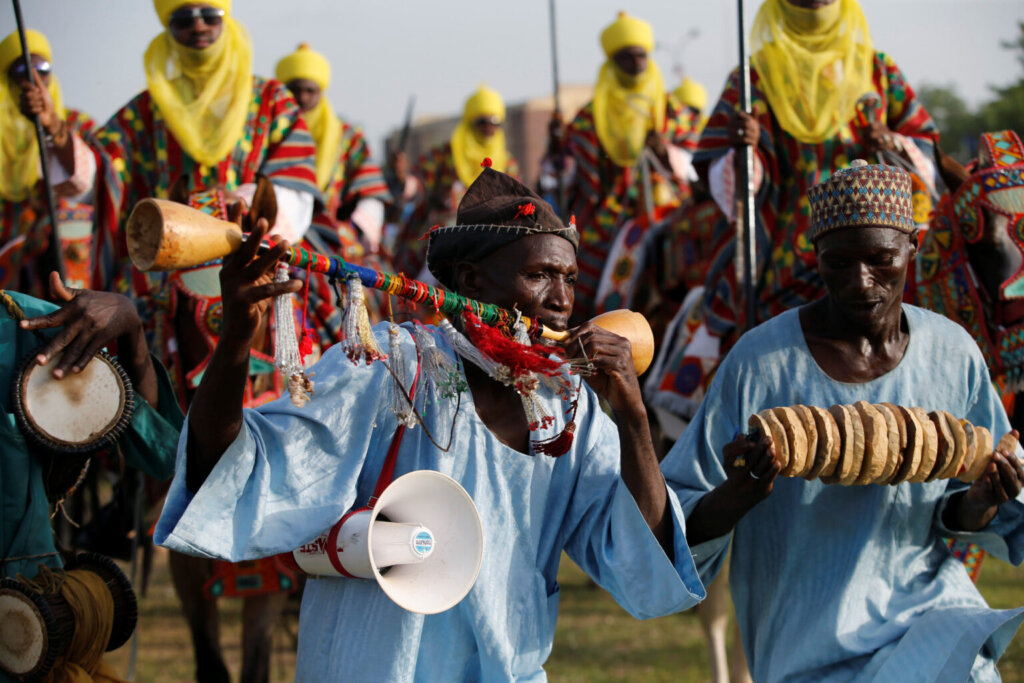
In the north Hausa city states like Kano Katsina and Zaria became trade centers. They were connected to trans Saharan trade routes. Gold salt leather and cloth moved through these cities. Islam spread through trade and learning and became an important part of northern life.
The Sokoto Caliphate and Islamic Influence
In the early nineteenth century a major change happened in the north. A scholar and leader named Usman dan Fodio led a religious movement. This led to the creation of the Sokoto Caliphate.
The caliphate united many Hausa states under Islamic law and leadership. It improved education justice and administration in many areas. Islamic schools grew and literacy increased. The caliphate became one of the largest states in Africa at that time.
Islam had already been present but this movement strengthened its role in politics and society. The influence of the Sokoto Caliphate is still felt today in northern Nigeria.
Contact With Europe and Early Trade
Europeans first came to the Nigerian coast in the fifteenth century. Portuguese traders arrived looking for goods and trade routes. Later British French and others followed. At first trade focused on items like pepper ivory and palm oil.
Sadly the slave trade became a major part of this contact. Millions of Africans were taken from the region and sold across the Atlantic. This caused great pain and loss. Families were broken and communities damaged. Coastal areas became linked to European markets while inland areas suffered raids and fear.
Even after the slave trade ended European interest continued. Palm oil became important during the industrial revolution. This increased foreign involvement in local affairs.
British Rule and Colonization
By the late nineteenth century Britain began to take full control of the area. Through treaties and force they claimed land and power. In 1914 Britain joined northern and southern territories into one country called Nigeria.
Colonial rule changed many things. British authorities used indirect rule especially in the north. They governed through local rulers. In the south they introduced Western education and Christian missions. This created differences in development and education levels.
Colonial policies focused on resource extraction not local growth. Railways and roads were built mainly to move goods to ports. Nigerians had little say in government. Taxes and laws often caused anger and resistance.
Despite this Nigerians adapted and learned. Western education created a new class of thinkers writers and leaders. Newspapers and political groups began to form.
Nationalism and the Road to Independence
In the early twentieth century Nigerian nationalism grew stronger. Educated Nigerians began to demand rights and self rule. Leaders spoke out against injustice and racial discrimination.
Important figures included Nnamdi Azikiwe and Obafemi Awolowo. They used newspapers speeches and political parties to mobilize people. Different regions formed parties that reflected local interests.
After World War Two Britain began to prepare colonies for independence. Constitutions were created and elections held. Nigerians slowly gained more control.
On October 1 1960 Nigeria became independent. People celebrated with joy and pride. The new nation had great hope and promise.
Early Independence and Political Struggles
Independence brought excitement but also challenges. Nigeria was a large country with many ethnic groups and religions. Creating unity was not easy. Regional politics often came before national interest.
The first republic faced problems like election disputes corruption and power struggles. In 1966 the military took control through a coup. This led to more coups and instability.
The Nigerian Civil War
One of the darkest times in Nigerian history was the civil war from 1967 to 1970. The eastern region tried to break away and form a new state called Biafra. The federal government fought to keep the country united.
The war caused great suffering. Many people died from fighting and hunger. Families were displaced. In the end the federal side won and the country remained one.
After the war leaders promoted the idea of no victor no vanquished. Efforts were made to rebuild and reunite the nation.
Military Rule and Economic Changes
Nigeria spent many years under military governments. Some leaders focused on unity and development. Others ruled with fear and repression. Civil rights were limited and opposition was often silenced.
Oil became very important during this time. Nigeria discovered large oil reserves in the Niger Delta. Oil brought wealth but also problems. Corruption increased and other sectors like agriculture suffered.
Despite oil money many Nigerians remained poor. Environmental damage in oil areas caused anger and protests.
Return to Democracy
In 1999 Nigeria returned to civilian rule. A new constitution was adopted and elections held. This marked the start of the Fourth Republic.
Democracy brought new freedoms. Media grew and civil society became active. Elections were not perfect but progress continued. Power shifted between parties through votes not guns.
Challenges remain. Corruption insecurity and poverty still affect many lives. Yet Nigerians continue to push for better governance.
Modern Nigeria and Cultural Strength
Today Nigeria is a vibrant nation. It has the largest population in Africa. Its cities like Lagos are full of energy and creativity. Nigerian music movies fashion and literature are known around the world.
Nollywood is one of the largest film industries globally. Nigerian artists top global music charts. Writers win international awards.
Technology and youth innovation are growing fast. Young Nigerians use social media to speak out and create change.
Conclusion
The history of Nigeria is a story of strength struggle and survival. From ancient cultures to modern cities Nigerians have always adapted and moved forward. The past includes pain and conflict but also wisdom and pride.
Understanding this history helps us understand Nigeria today. It explains its diversity its challenges and its potential. Nigeria is not just a country. It is a living story still being written by millions of voices.
As Nigeria moves into the future its deep history remains a source of identity and power.


History of Nigeria: From Ancient Kingdoms to Modern Nation
Timeline & Dates
Core Information
Multimedia Gallery
history of nigeria
Related Events
Complete History of Nigeria Immigration Service and Its Role in Nigeria Today
History of Victor Osimhen: From Lagos Streets to World-Class Striker
History of Kambari: Nigeria’s Naked Tribe
History of Kano State
Story of the Idanre Hills
About the Author
Muili Muhammed
No bio available.
Comments